Designing Estate-Lot Living In Indian Creek Preserve
June 25, 2026
June 25, 2026
If you want room to build big without feeling boxed in, Indian Creek Preserve stands out fast. Estate lots that approach one acre each are rare in the Elkhorn area, especially in a golf-course setting where design choices can shape how you live every day. If you are weighing a future build here, this guide will help you think through lot types, design standards, privacy, outdoor living, and the practical details that matter before you move forward. Let’s dive in.
Indian Creek Preserve is positioned near 196th and Fort in the Elkhorn area and is marketed as an upscale golf-course residential development adjacent to Indian Creek Golf Course. The community is planned for 33 estate lots that approach one acre each, which creates a very different feel than a typical suburban subdivision.
This is important because a near-acre homesite changes what is possible. You may have more flexibility for wider home footprints, deeper setbacks, larger outdoor living areas, and more separation between your daily-use spaces and your entertaining spaces.
Builder and community materials also frame Indian Creek Preserve as a custom-home setting. It is presented as a neighborhood of estate homes rather than standard suburban infill, with homes in the $1,000,000-plus range and custom-home builder involvement.
On a larger homesite, your design decisions carry more weight. You are not only choosing a floor plan. You are deciding how the home sits on the lot, how outdoor spaces connect to indoor rooms, and how you want views, privacy, sunlight, and access to work together.
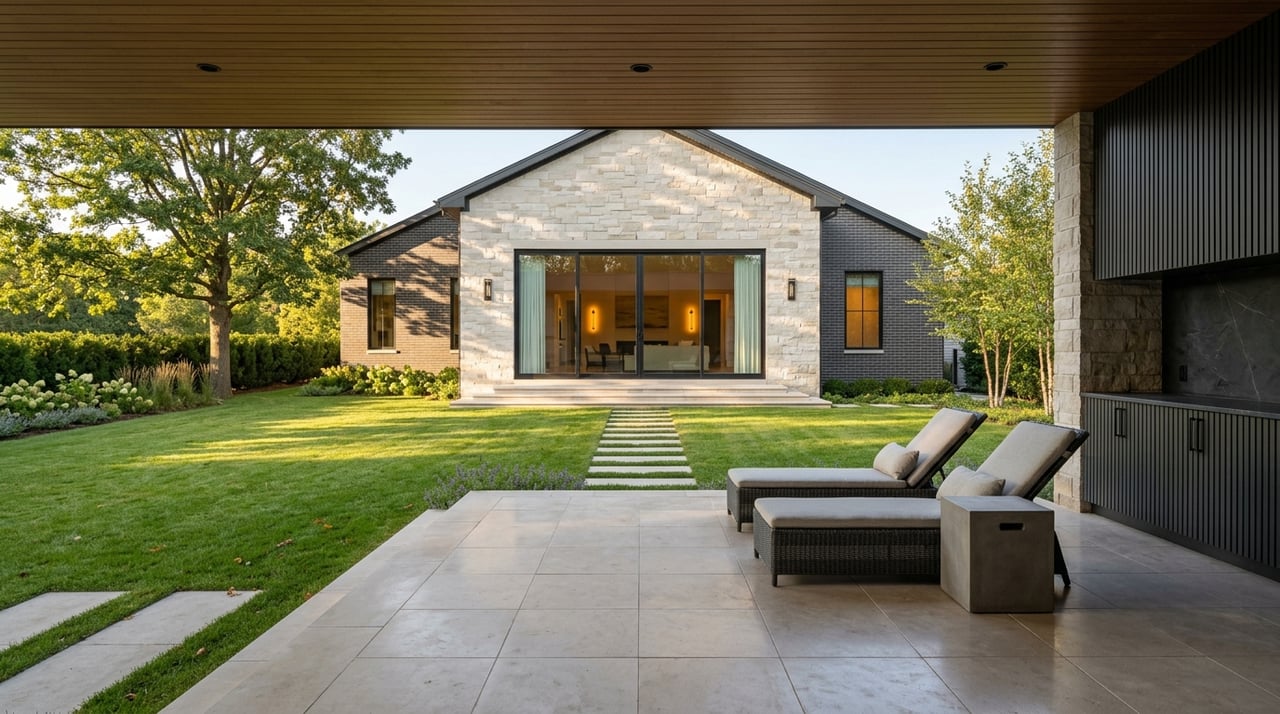
That scale can support features that are harder to pull off on a smaller lot. Think larger patios, pool space, fire features, expanded landscaping, and more breathing room around the home. While that is not listed as a formal neighborhood rule, it is a practical design advantage that comes with lots of this size.
In a custom-home community, that extra space is most valuable when it is planned intentionally. A beautiful house on a large lot can still feel awkward if the driveway, garage placement, backyard layout, and view corridors are not working together.
One of the most useful details in Indian Creek Preserve is that Phase I is divided into course lots, interior lots, and perimeter lots. That matters because not every lot will offer the same experience, even within the same neighborhood.
The phase sheet identifies course lots as lots 1 through 4 and 28 through 33. These lots may offer stronger golf-course orientation, but they also sit next to an active public, daily-fee, 27-hole championship golf facility rather than a quiet private greenbelt.
For you, that means design should balance openness with privacy. Smart window placement, deeper covered patios, landscape screening, and thoughtful rear-yard planning can help you enjoy the view without feeling overexposed.
Interior lots are identified as lots 5 through 14, 21 through 24, and 27. These lots may be a fit if you prefer a design process that focuses more on internal lot layout, outdoor room placement, and how the home relates to nearby homes rather than direct course frontage.
That can create a different kind of opportunity. Instead of prioritizing long golf views, you may focus more on a private courtyard feel, backyard symmetry, or a strong front-elevation presence.
Perimeter lots are identified as lots 15 through 20 and 25 through 26. In many custom neighborhoods, edge lots can appeal to buyers who value a distinct boundary condition, whether that means a different orientation, a more buffered setting, or a particular privacy profile.
The key point is simple: lot selection should happen alongside house design. A great plan on the wrong lot can create compromises that are hard to fix later.
Indian Creek Preserve offers generous homesites, but it is not a free-for-all. Builder materials point to specific architectural and site expectations that help maintain a consistent estate-home feel across the neighborhood.
Here are a few standards buyers should expect to review closely:
These details matter because they affect both function and curb appeal. A sideload garage, for example, can improve the front elevation and reduce the dominance of garage doors from the street, but it also affects driveway length, turning radius, and site layout.
The front-stone and square footage standards also shape the level of finish and presence expected in the neighborhood. If you are budgeting a build, these are not minor details. They influence design, materials, and total project scope from the beginning.
Builder materials note that heavily treed lots are available. That gives you a valuable design variable that newer developments do not always offer.
Existing trees can help with shade, soften views, and add seasonal privacy. They can also shape where the home sits, how outdoor spaces are oriented, and what kind of grading or preservation planning may be needed during the build process.
If you are considering a treed lot, it helps to think beyond first impressions. Ask how tree preservation may affect the driveway layout, utility routing, patio placement, and the amount of usable lawn or outdoor living area you want to maintain.
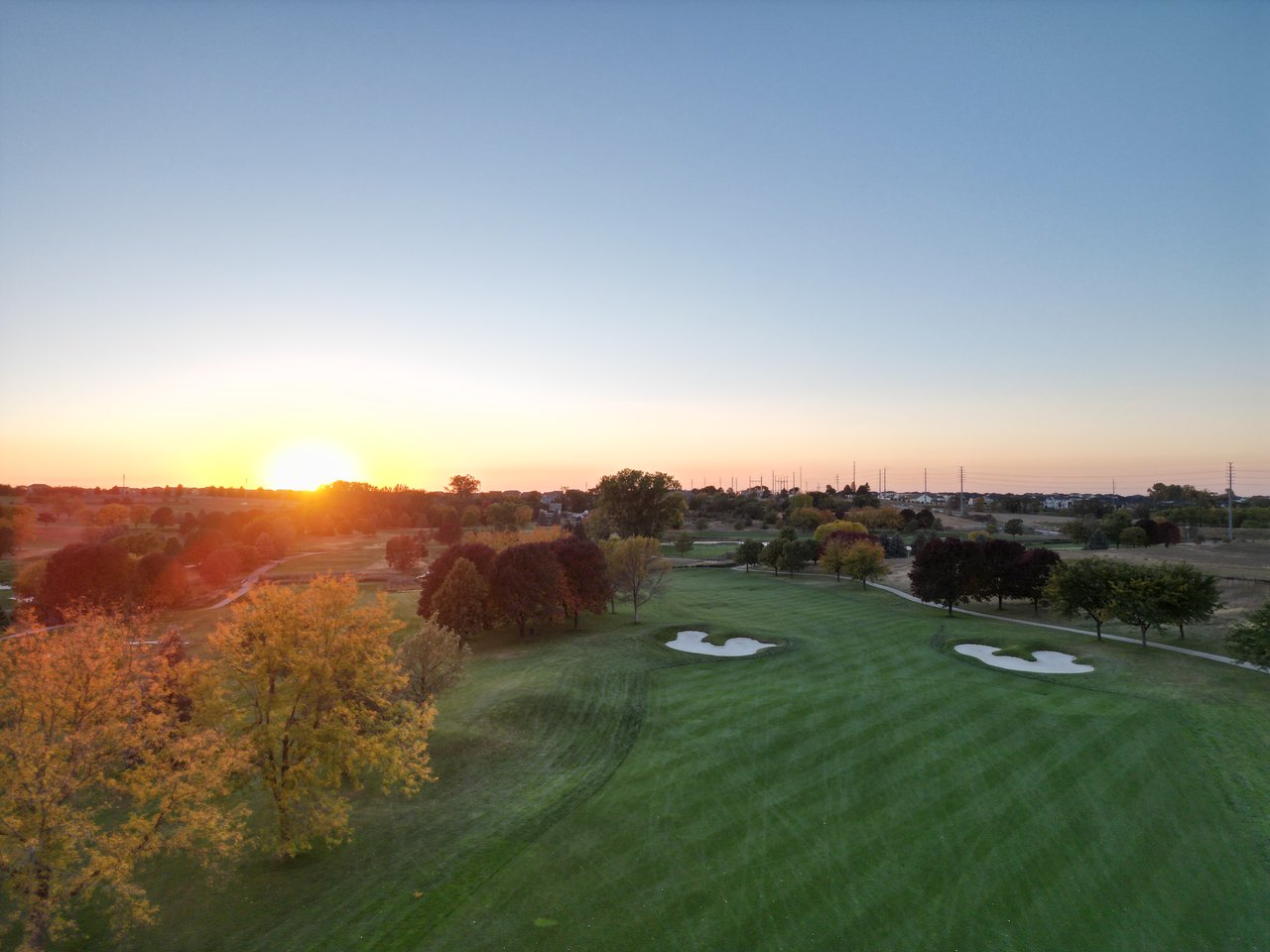
The Club at Indian Creek is an active public golf facility that hosts amateur and professional competition. That makes course-facing design more nuanced than simply chasing the biggest rear view.
You may want to think carefully about rear glass placement, elevated outdoor spaces, porch depth, and layered landscaping. The goal is to create a home that captures openness while still giving you a sense of retreat.
For some buyers, that may mean orienting the main entertaining area slightly off-axis from the widest exposure. For others, it may mean using landscaping and fencing to define private zones without losing the feel of the larger setting.
Large-lot living also comes with practical planning. Indian Creek Preserve is described by Landmark as having an established SID, and Douglas County explains that SIDs are used in new developments for basic services such as water, sewer, roads, sidewalks, and related infrastructure.
Douglas County also notes that a five-member board governs the district and helps set its tax rate. For you as a buyer, that means SID-related budgeting and approvals should be part of your due diligence when reviewing the neighborhood.
Utility coordination is also a real and current part of development here. Metropolitan Utilities District approved a main extension at North 195th Street and Fort Street to provide domestic water service and fire protection for Indian Creek Preserve lots and outlots, which shows that infrastructure planning is active and phase-based.
In a neighborhood like this, the smartest move is to confirm details early. The official community site provides a plat map and contact information, and builder materials note that lot information and availability can change.
Before you move forward, make sure you verify:
This step matters because a custom-home purchase is not just about liking a neighborhood. It is about making sure the lot, the rules, the budget, and the design vision all line up.
The best lot in Indian Creek Preserve is not the same for every buyer. If you want broad views and a strong connection to the course, course lots may stand out. If you want a more inward-focused design with strong outdoor privacy, an interior or perimeter lot may be the better match.
What matters most is how you want to live on the property. Do you picture large-scale outdoor entertaining, a quieter backyard retreat, preserved trees, or a home with a strong architectural front presence? Those answers should guide your lot search.
In a custom neighborhood, the win is not only buying into a location. It is pairing the right homesite with a design strategy that makes the most of it.
If you are exploring Indian Creek Preserve and want local guidance on lot positioning, neighborhood fit, and how this community compares with other upper-tier options in Elkhorn and northwestern Douglas County, the Ralph Marasco Real Estate Group can help you navigate the details with clear, local insight.

Real Estate
A location that can't be replicated.
When you list your home with Nico, you get Omaha’s top real estate agent working for you. No giant team to hide behind. You hire Nico, you get Nico!
RALPH MARASCO REAL ESTATE GROUP
Nico Marasco
331 Village Pointe Plz
Omaha NE 68118