
What Is an SID in Omaha, and What It Adds to Your Payment
Real Estate Nico Marasco November 13, 2026
An SID, short for sanitary and improvement district, is the reason a new house in Elkhorn or Gretna can carry a higher tax rate than an older one a mile away. It is not a fee and it is not an HOA. It is a small unit of local government that borrowed money to build the streets, sewer and water lines under a subdivision, and the property tax levy that repays that debt shows up on your bill until the district is paid down or annexed. If you are buying new construction anywhere in the Omaha metro, the SID levy is the number to ask about before you sign.
Nebraska lets the owners of a piece of land form a sanitary and improvement district under Chapter 31 of the state statutes. The district files articles with the county district court, names five or more trustees, and gets the power to install sewers, water lines, streets, sidewalks, street lights and parks inside its boundaries.
In practice, the developer forms it. The early board is usually the developer and people the developer picks, because they own all the lots at that point. The district issues bonds and warrants, that money builds the infrastructure, and as lots sell and houses go up, the homeowners become the taxpayers who repay it. Sarpy County's SID page puts it plainly: the district can issue bonds, levy taxes and special assessments, and set rates for services.
Most of the subdivisions built in Douglas and Sarpy County over the last few decades started life this way. It is a large part of how West Omaha got built. The district is temporary in theory, but the debt is real for as long as it lasts.
Your property tax is a stack of levies from different taxing bodies, all applied to the same assessed value: the county, the school district, the community college, the natural resources district, and so on. An SID is one more line in that stack. In Douglas County, the treasurer's property tax lookup lists every levy on a parcel, and the SID appears by number, something like SID 575.
The size of that line varies a lot from one district to the next. Newer districts tend to sit at the high end because their debt is fresh, and older ones come down as the bonds are paid off. The only rate that matters is the one on the parcel you are buying, and it can move your monthly payment by a real amount, so pull it before you compare two homes on price alone.
That is how two homes of the same value, a few streets apart, can end up with tax bills that differ every single year. Same house, different street, different number.
Two things catch people, whether they are pricing a custom build or what a villa lot in Elkhorn costs. The first is that the SID levy is often left out of the mental math. A builder quotes a price, a lender quotes a payment, and the tax estimate behind that payment is sometimes based on last year's assessment, when the parcel was bare dirt. Once the finished house is assessed, the tax portion of the payment can jump, and the SID levy is part of that jump.
The second is that the levy is not fixed. An SID board sets its budget every year. A young district with a lot of bonds outstanding and only a handful of finished homes has to spread that debt across fewer taxpayers, so its levy tends to start high and ease as the subdivision fills in and the bonds get paid down. Two districts a mile apart can be at very different points in that cycle.
This is the part most people never hear. The City of Omaha has annexed SIDs for decades, and when it does, the district dissolves. The city takes on the remaining debt, the SID line comes off your bill, and the city's levy goes on in its place. Often that is a lower total rate, though not always, and the timing is entirely up to the city. Douglas County districts around Elkhorn and Bennington have historically been annexed somewhere in the range of fifteen to twenty five years after formation, based on the local guides I read, but nothing obligates the city to any schedule.
Sarpy County is a different story. Omaha does not annex there. A Gretna or Papillion district either gets annexed by that city or runs the full life of its bonds, which can be thirty years. If you are comparing a new house in Elkhorn against one in Gretna, that difference belongs in the comparison.
Ask for the SID number and the current year's levy, then look the parcel up yourself on the county treasurer's site. Ask how old the district is and how much bond debt is outstanding, which the district's annual budget filed with the county clerk will show. Ask your lender to base the escrow estimate on the finished home's value, not the lot's. And ask whether there is any annexation talk, which shows up in city planning board and council agendas long before it happens.
None of this is a reason to avoid new construction. It is how the metro gets new streets without the city paying for them up front, and a large share of the houses in West Omaha went through it. It is just a number that belongs on the table with the purchase price and the interest rate, not something you find out about in your first escrow statement.
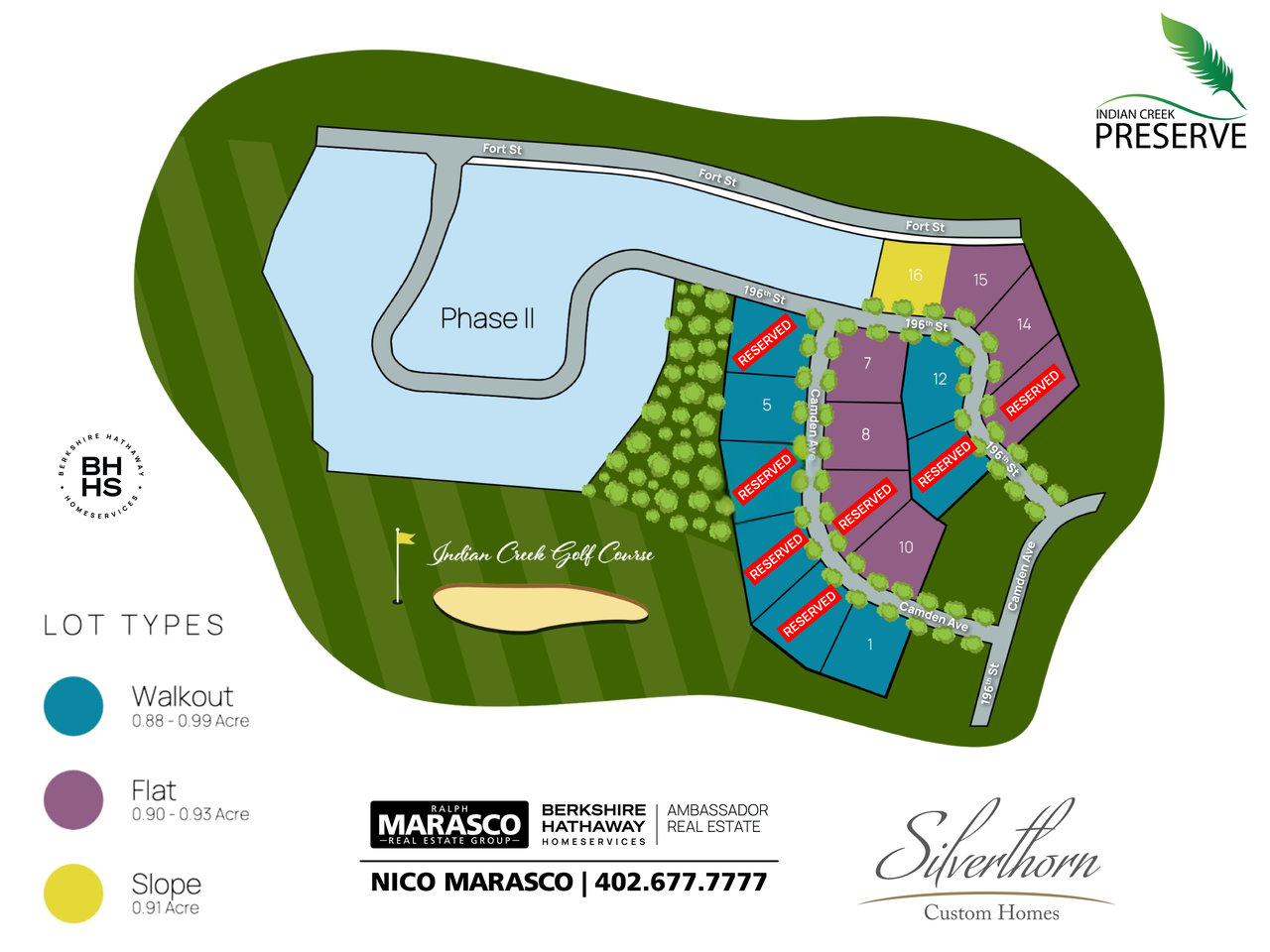
If you are looking at a lot or a new build in Elkhorn, Gretna or anywhere in West Omaha, including the villa lots at Indian Creek Village, and you want to know exactly what the SID on that parcel means for your payment, reach out. Working with a buyer's agent on new construction gets you someone who will pull the levy, the district's age and the debt, and walk you through it before you write an offer. You can reach me directly at 402.690.7777.
Sources: Nebraska Revised Statute 31-727 on how a district is formed; Sarpy County's SID page; the Douglas County Treasurer property tax lookup; and Omaha Guide's 2025 property tax breakdown.
Real Estate
Real Estate
Real Estate



When you list your home with Nico, you get Omaha’s top real estate agent working for you. No giant team to hide behind. You hire Nico, you get Nico!
RALPH MARASCO REAL ESTATE GROUP
Nico Marasco
331 Village Pointe Plz
Omaha NE 68118