Millard Was Its Own Town Until 1971, and It Still Acts Like One
Nico Marasco October 5, 2026
Nico Marasco October 5, 2026
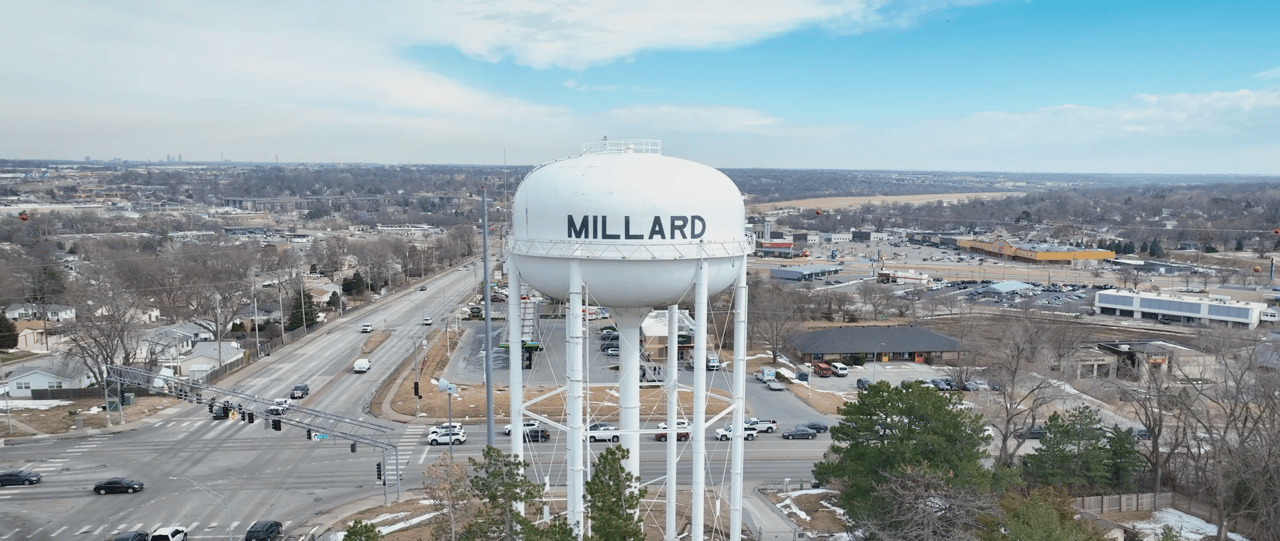
Ask someone from southwest Omaha where they live and a fair number will say Millard before they say Omaha. That is not an accident. Millard was a separate town for about a century, with its own mayor and its own main street, and the city absorbed it in 1971 only after a long legal fight. More than fifty years later, the water tower at 144th and Q still has the old name painted on it, and nobody seems inclined to change that.
I spend a lot of my time out west selling new construction. Millard is close to the opposite of that, and I think it is worth writing about for exactly that reason.
Millard sits in southwest Omaha, roughly between 108th and 180th Streets, with Blondo Street on the north and Harrison Street on the south. The center of gravity is around 144th and L. That is a bigger footprint than most people picture, and it means the word Millard covers everything from 1960s ranches to subdivisions that were farm ground not long ago.
The original town, which people call Old Millard, is the few blocks around Millard Avenue and L Street. Ezra Millard, a banker who later served as mayor of Omaha, platted it in 1870 on open prairie about twelve miles out. The Union Pacific line running through it is the reason the town survived. It incorporated in 1885 and stayed under 400 people into the 1950s. Then the sixties arrived. The population went from about a thousand in 1960 to seven and a half thousand by 1970, Omaha annexed the town the following year, and the rest of the metro grew west to meet it.
Housing in Millard follows that timeline, and once you know the timeline you can read the streets.
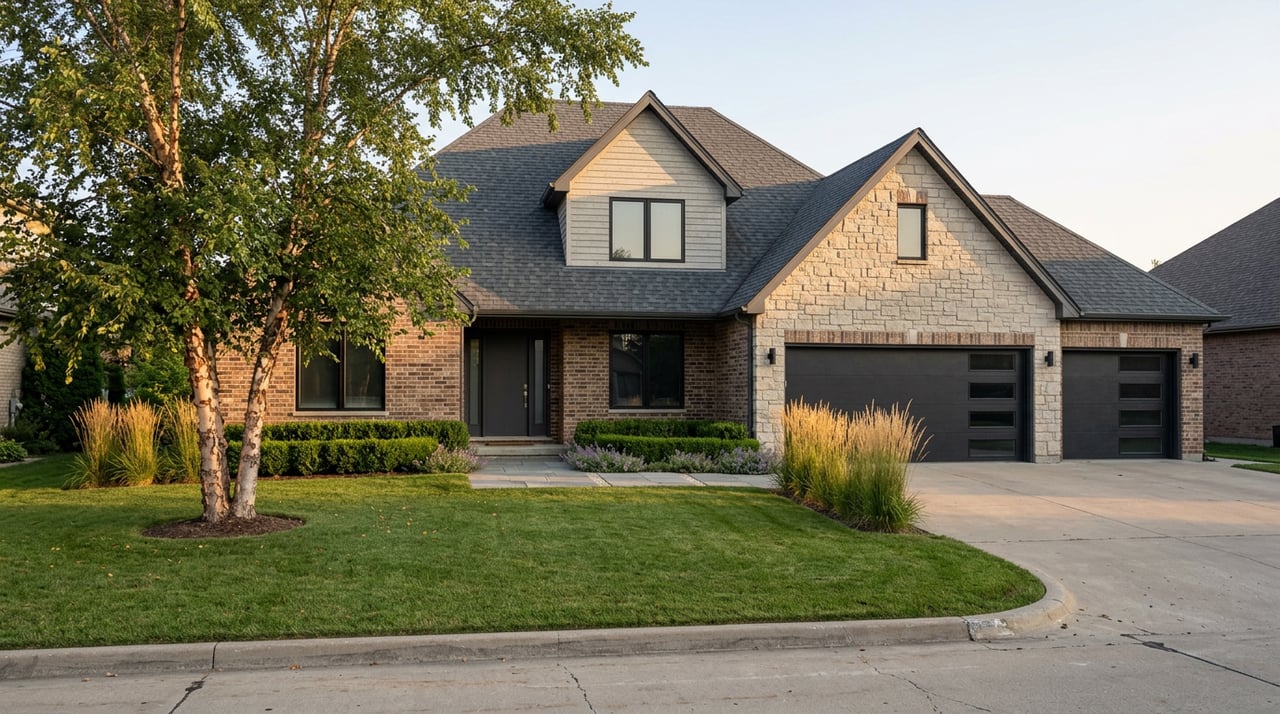
Closest to Old Millard and east toward 108th, you find the sixties and seventies: raised ranches, split levels, and split entries on lots with mature trees. These are the homes that made Millard what it is. Main floors often run somewhere around 1,400 to 1,800 square feet, which is modest by current standards, but the lots are generous and a finished basement usually adds real living space.
Move west and north and the decades tick forward. The eighties and nineties brought two stories and larger ranches, more brick on the front, and bigger garages. Out toward 168th and 180th you reach homes from the 2000s and later, which start to look like the rest of West Omaha. Townhomes and condos are scattered through the whole area and typically come in under the single family numbers.
On price, I will say what I say about every neighborhood: the number depends on where you draw the line and who is drawing it. In broad strokes, the older sections of Millard hold a large share of the metro's more approachable single family resale homes, and the newer western sections price closer to the rest of West Omaha. If you want a real figure for a real street, ask me and I will pull the comps rather than quote a website. I wrote about why the same neighborhood shows a different median on every site, and everything in that post applies here too.
This is the part people underrate. Interstate 80 runs along the south edge of Millard, and L Street and Q Street run straight east into the city. Downtown Omaha is a bit over a dozen miles from Old Millard, and on a normal morning that is under twenty minutes on the interstate. Heading the other direction, 144th and 156th take you north to Dodge and the rest of West Omaha without much drama. For a neighborhood this far from the river, Millard moves well.
Zorinsky Lake Park is the big one, and it is mostly inside Millard's footprint. The park covers just over a thousand acres at 156th and F Streets, with a 255 acre lake at the center and about 7.4 miles of trail looping both lakes. It opened in 1993 and is named for the late Senator Edward Zorinsky. You can boat, fish from the shore or the dock, run the loop, or walk the dog and call it exercise. There are ball fields, soccer fields, and two playgrounds as well.
Andersen Park, near the old downtown, is where Millard Days sets up each August. Chalco Hills Recreation Area is a short drive south across the interstate if Zorinsky is busy. Between those three you have more public green space than most parts of the city can claim.
The brick streets are still there. Millard Avenue has a few blocks of bars and restaurants, including Brick Street Tavern and Local Beer, Patio and Kitchen, and the L Street Marketplace a few minutes away handles the big box errands. It is not a tourist district and does not try to be. It is a main street that happens to sit inside a city of half a million people, which is a rare thing to have within walking distance of a 1968 split level.
For buyers, Millard is the strongest argument in Omaha for resale over new. You get established trees, a lot you can actually use, and infrastructure that was paid off decades ago. The tradeoff is that you are buying someone else's choices, and a sixties home may need a kitchen, windows, or a roof in the next several years. I would rather you know that walking in.
For sellers, the same facts cut the other way. Buyers who want Millard tend to want it specifically, for the location and the lot, and a well kept home in the older sections usually finds its audience. Pricing it right matters more than staging it perfectly. I can tell you what the last six months on your street actually did.
If you are weighing Millard against something newer out west, I can show you both in the same afternoon. My Elkhorn page is a fair picture of the other end of that comparison, and the Millard page has current listings in the area.
Either way, reach out. I will tell you what is on the market, what it is really worth, and whether the water tower is visible from the backyard, which some people care about more than they admit.
When you list your home with Nico, you get Omaha’s top real estate agent working for you. No giant team to hide behind. You hire Nico, you get Nico!
RALPH MARASCO REAL ESTATE GROUP
Nico Marasco
331 Village Pointe Plz
Omaha NE 68118